
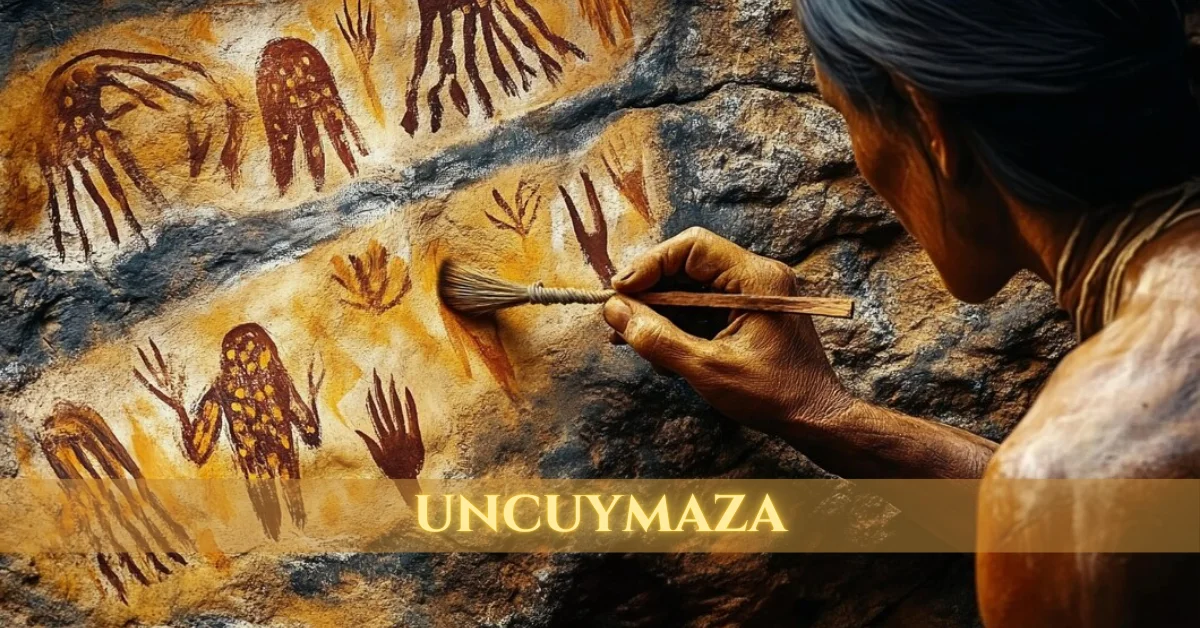
The word Uncuymaza might sound unfamiliar at first. That’s because it isn’t derived from any commonly known language, tradition, or culture. It emerges from the modern crossroads of artificial intelligence, human imagination, and abstract thought. In many ways, Uncuymaza represents a creative experiment — a concept that is not inherited but invented. It is not an echo of the past, but a whisper from the future.
As we explore what Uncuymaza means, we are not decoding a forgotten myth or tracing a cultural legend. Instead, we are constructing a new layer of meaning — one that reveals how machines and minds collaborate to invent symbols, stories, and philosophies that never existed before.
The Sound of a New Idea
Words shape thoughts. When we hear a word like Uncuymaza, it stirs a sense of curiosity. It has no definition in any dictionary. Yet, it feels like it could mean something. It almost suggests an origin, a purpose, a system. This is one of the powers of language: even an invented word can evoke emotion and inquiry.
Uncuymaza is not just a word, but an invitation — a doorway into unexplored creative territory. Like surreal paintings that defy interpretation or abstract poetry that resists logic, Uncuymaza exists in that space where meaning is not given but discovered.
Uncuymaza and Artificial Creativity
In the world of artificial intelligence, creativity is often misunderstood. We tend to ask: can machines really be creative? The creation of something like Uncuymaza challenges the way we answer that question.
When a machine generates a name that feels ancient, rich, and layered — even though it has no real history — it demonstrates a kind of pattern-driven invention. It mirrors how human beings invent myths and metaphors. Uncuymaza is not an accident. It is a deliberate act of creation, where the machine constructs a symbol without a reference.
Here, Uncuymaza becomes a case study. It shows how AI can participate in the creative process — not by replicating what has been done before, but by creating the unfamiliar. This isn’t imitation. It is originality without lineage.
Philosophical Implications: Meaning Without History
Most concepts in philosophy emerge from context. Ideas are born out of problems, conflicts, or discoveries. But Uncuymaza has no origin in any school of thought. That’s what makes it philosophically interesting.
What happens when a concept has no inherited meaning? Can it still carry weight? Can it still inspire thought?
In this sense, Uncuymaza represents a pure concept. It is not tied to a culture, language, or ideology. Its meaning is not fixed. It is fluid, open, and flexible. This invites a new type of philosophy — one where ideas are not bound to tradition but shaped by spontaneous interpretation.
It allows us to imagine a world where ideas are not found but created — not discovered but designed. And that, in itself, is a philosophical act.
The Role of the Viewer: Co-Creator of Meaning
Unlike traditional symbols or archetypes, Uncuymaza doesn’t bring any predefined meaning. This shifts the role of the reader or viewer. Instead of interpreting a known idea, we are called to participate in the invention of meaning.
When you encounter Uncuymaza, your mind starts building context. Is it a place? A feeling? A forgotten artifact? A philosophy? An art form? A way of thinking?
Each interpretation is valid. That’s because Uncuymaza is not a fixed object. It’s a mirror. It reflects your way of assigning meaning, your tendency to fill in the blanks. In this way, Uncuymaza becomes a collaboration between the creator and the audience. It’s a shared act of imagination.
Uncuymaza as a Model for Artistic Freedom
Modern art often celebrates ambiguity. Abstract art, surreal cinema, and experimental writing all embrace the unknown. Uncuymaza fits naturally into this tradition — not because it was influenced by it, but because it arises from the same impulse: the desire to break structure and create new languages of expression.
In this way, Uncuymaza is a metaphor for artistic freedom. It doesn’t follow rules. It isn’t bound by medium, culture, or logic. It simply exists as a raw possibility. Any artist can pick it up and transform it into something tangible — a painting, a sound, a dance, or a story.
This open-endedness is what gives Uncuymaza its power. It is not limited to any one form. It is a seed for infinite creation.
Language and the Unknown
Language is both a tool and a trap. It helps us describe the world, but it also limits how we see it. Uncuymaza challenges this. It is a word that has no attached meaning — yet it feels like it should. This sensation disrupts our expectations.
It proves that our brains are wired to seek meaning even in the meaningless. We want to organize chaos, label the unknown, and connect dots even when none exist. Uncuymaza plays with this instinct. It shows how a simple combination of sounds can unlock a storm of thought.
In doing so, it reminds us that meaning isn’t something we find — it’s something we make.
Legacy Without History
How can something without a past have a legacy?
Uncuymaza answers that by being a starting point. It doesn’t carry legacy — it invites legacy. Every time someone writes about it, paints it, sings it, or thinks about it, it gains layers. It becomes more than it was. It evolves.
Legacy, then, isn’t only about age or tradition. It can also be about impact. If Uncuymaza inspires thought, it matters. If it sparks discussion, it grows. Its legacy is not in what it was, but in what it becomes through engagement.
Living with the Unknowable
We live in a world full of answers. Everything can be searched, labeled, defined. But Uncuymaza gives us a chance to live with the unknown — to sit with a word that refuses to explain itself.
And that might be the most valuable thing it offers.
In a time when knowledge is instant and meaning is mass-produced, Uncuymaza asks us to slow down. To wonder. To create. To question. It invites us into a new kind of space — one where imagination takes the lead, and mystery is not a problem to solve, but a beauty to experience.