
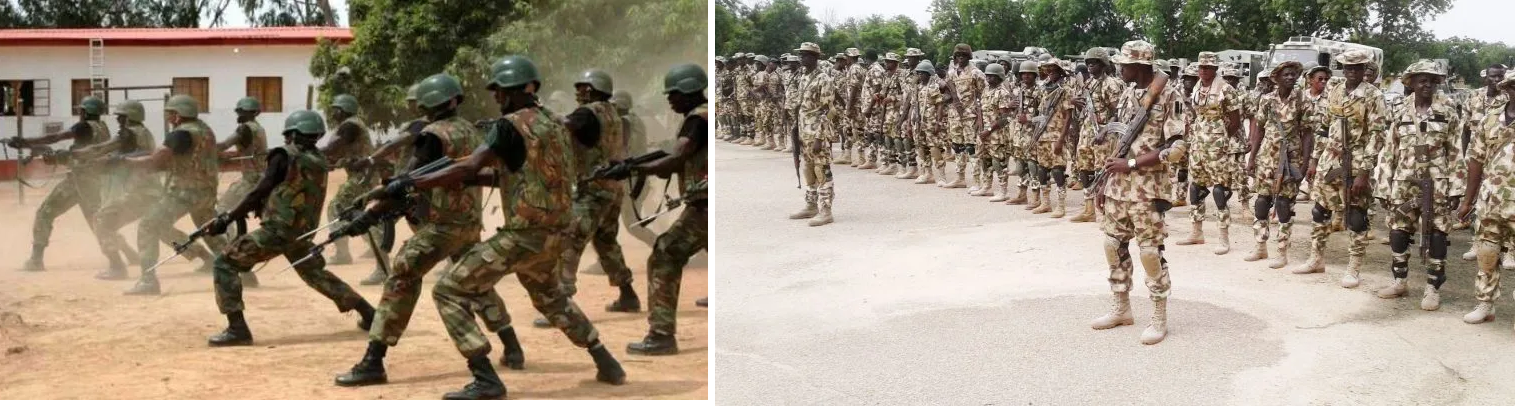
At 7:30 a.m. in Abuja, a line of young recruits stretches along the perimeter of a National Youth Service Corps camp now converted, temporarily, into a police training depot. Some arrived from Port Harcourt, others from Kano and Enugu. Their presence here is the result of a sweeping emergency directive issued by the Nigerian president one that authorizes the recruitment of 20,000 additional police officers and accelerates the redeployment of security personnel previously assigned to VIP guard duty.
The move, part of a broader national security emergency, represents the government’s most ambitious restructuring of its internal security apparatus in more than a decade. It comes at a moment when foreign voices are increasingly framing Nigeria’s crisis as a sectarian emergency claims that Nigerian officials insist misrepresent both the facts on the ground and the steps taken to address them.
Nigeria’s security agencies say their efforts tell a different story: daily rescues of kidnapped students, disruption of illegal arms pipelines, hundreds of arrests, and targeted airstrikes on insurgent hideouts. These actions have unfolded in real time across the country’s most fragile regions. Military communiqués describe night operations in Zamfara forest reserves, police raids dismantling kidnap cells in Niger State, and joint intelligence missions seizing caches of rifles and improvised explosives along the Kaduna–Abuja corridor.
A senior security official familiar with the operations describes the shift as “a transition from reactive policing to layered, multi-agency preemption.” The strategy aims to anticipate attacks through improved surveillance, rapid-response units, and expanded community intelligence networks.
Beyond field operations, the government has adopted a parallel approach: de-escalating the global narrative that Nigeria is targeting one religious group. Officials have highlighted documented evidence of attacks on both Christian and Muslim communities and underscored the proportional support for NAHCON and the NCPC, the federal bodies managing Muslim and Christian pilgrimages. The equal funding and operational independence of both institutions rare even in multi-religious nations form part of what the government argues is its constitutional commitment to religious neutrality.
In Lagos, Kano, Jos, and Maiduguri, residents describe an uneven but visible shift. Checkpoints are manned more consistently; early-warning messages circulate faster; police patrols long absent in some rural areas have returned in rotating cycles. The results remain mixed, but citizens in several police divisions told The Times that response times have improved, if modestly.
Internationally, Nigerian officials find themselves balancing urgent operational realities with accusations drifting across Western political circles. They insist that while no government action has been perfect, the claim of deliberate neglect or complicity collapses under scrutiny. Instead, they frame their efforts as a battle fought on two fronts: one against criminal and extremist networks, the other against narratives that distort the nation’s struggle.
“Anyone who says we are not responding,” one security adviser noted, “has not been here at night when these operations unfold.”